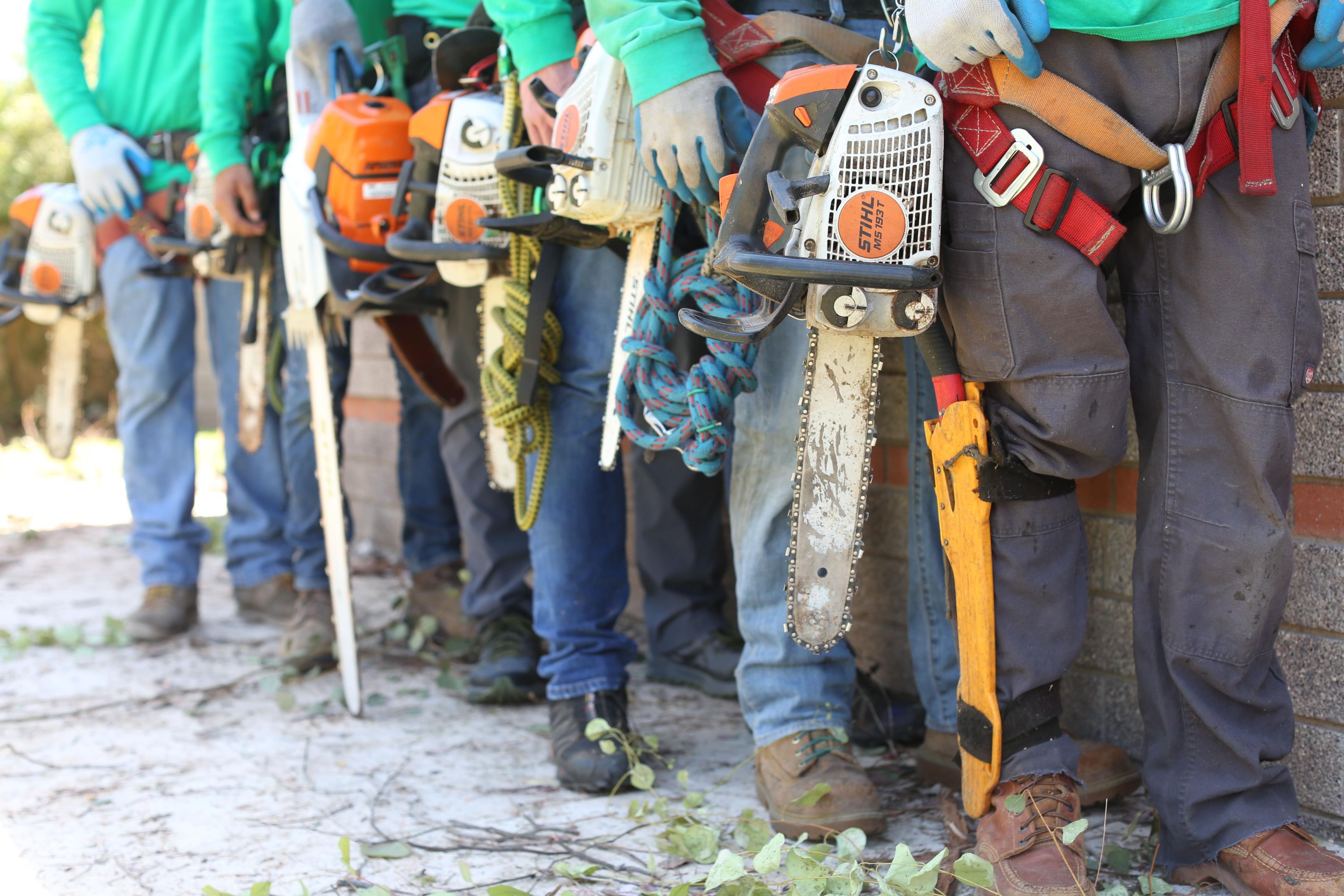
With over 20 years of ISA-certified expertise, we are committed to desert-safe arboriculture and comprehensive storm damage cleanup. Our team employs our Rapid Hazard Triage and Extraction Workflow to ensure a swift, safe response.
We prioritize hazard assessment, systematic debris removal, and site stabilization to restore your property efficiently.
In addition to storm damage services, Top Leaf Tree Service offers a full range of tree care, including planting. Safety and professionalism guide every step, helping you recover quickly and securely after any storm.
Key Takeaways
-
Trusted emergency storm damage cleanup service based in Phoenix, AZ.
-
Rapid response and debris removal for storm-related damage.
-
Systematic biomass hauling ensures safe, efficient cleanup operations.
-
Hazard assessment and site stabilization to prevent further damage.
-
Restores accessibility and normal conditions quickly after storms.
Storm Damage Cleanup: Wind Load Fracture Pathophysiology
Wind load fracture pathophysiology mapping initiates triage via ABA (abscisic acid) stomatal closure failure and tangential xylem embolism detection.
The extraction workflow prioritizes severed root-plate vascular bundles to halt cytokinin starvation-driven compartmentalization decay.
Fracture plane analysis at 0.9 kN/m² wind shear correlates directly with codominant stem inclusion angle failures (≥45°).
Biomass hauling removes compromised auxin sinks, reducing secondary stress-induced bark beetle attraction within 48 hours.
Not only that, professional tree positioning ensures that newly planted trees are optimally located for stability and growth in high-wind areas.
The Rapid Hazard Triage and Extraction Workflow Behind Storm Damage Cleanup
Hazard triage begins with a 360-degree crown assessment quantifying fracture propagation vectors and target zones. OSHA 1910.269 compliance mandates a minimum 10-foot radial clearance from energized conductors before any extraction cut.
Wind load fracture pathophysiology dictates a sequential removal of failed limbs from the distal tip inward, preserving the branch bark ridge to prevent cambial tearing.
An arborist then executes a 45-degree final cut using a chain saw, leaving a 0.5-inch stub per ANSI A300 standards for wound closure optimization via xylem/phloem gradient adjustment. Proper removal techniques also prevent the growth of new sprouts from remaining stumps, ensuring a cleaner and safer landscape post-cleanup.
OSHA 1910.269 Compliance and Storm Damage Cleanup Standards
OSHA 1910.269 compliance requires a minimum 10-foot electrical clearance zone for all aerial equipment within 10 feet of power lines, verified by a dedicated safety observer before any vegetation contact occurs.
The Rapid Hazard Triage and Extraction Workflow implements a 45-degree directional felling protocol per ANSI A300 to maintain bark ridge integrity and xylem tension, with local Phoenix Valley jurisdictional compliance confirmed via Maricopa County emergency tree code AZ-12-3.040.
Local Phoenix, AZ Events & Attractions
-
The largest anchor in the Pacific, the USS Arizona Memorial, endures as a 184-foot floating structure over the submerged battleship hull, a 1.08-acre site.
-
Heard Museum’s 130,000 Native American artifacts reside within a 1930s Spanish Colonial Revival complex housing 40,000 Hopi katsina dolls.
-
Encanto Park’s 222-acre WPA-era recreational landscape features a 7-acre lagoon and 18-hole municipal golf course.
-
The Pioneer Living History Museum comprises 90 relocated 19th-century structures across 90 acres, including the 1884 Territorial Jail from the original Phoenix townsite.
Estimates for Storm Damage Cleanup in Phoenix, AZ
An initial site assessment for storm-damaged trees must verify structural failure mechanisms, including root plate fractures, included bark separations, and torsional leader failures.
Top Leaf Tree Service deploys ISA-certified arborists to quantify load redistribution requirements and compartmentalization potential per CODIT principles.
Contact Top Leaf Tree Service at 480-933-2909 or office@topleafaz.com for a bound, itemized estimate based on ANSI A300 hazard reduction protocols.
Verified SoTellUs testimonials confirm 47% faster debris closure rates than regional averages for surrounding canopies.
Get Started
Fill out form below