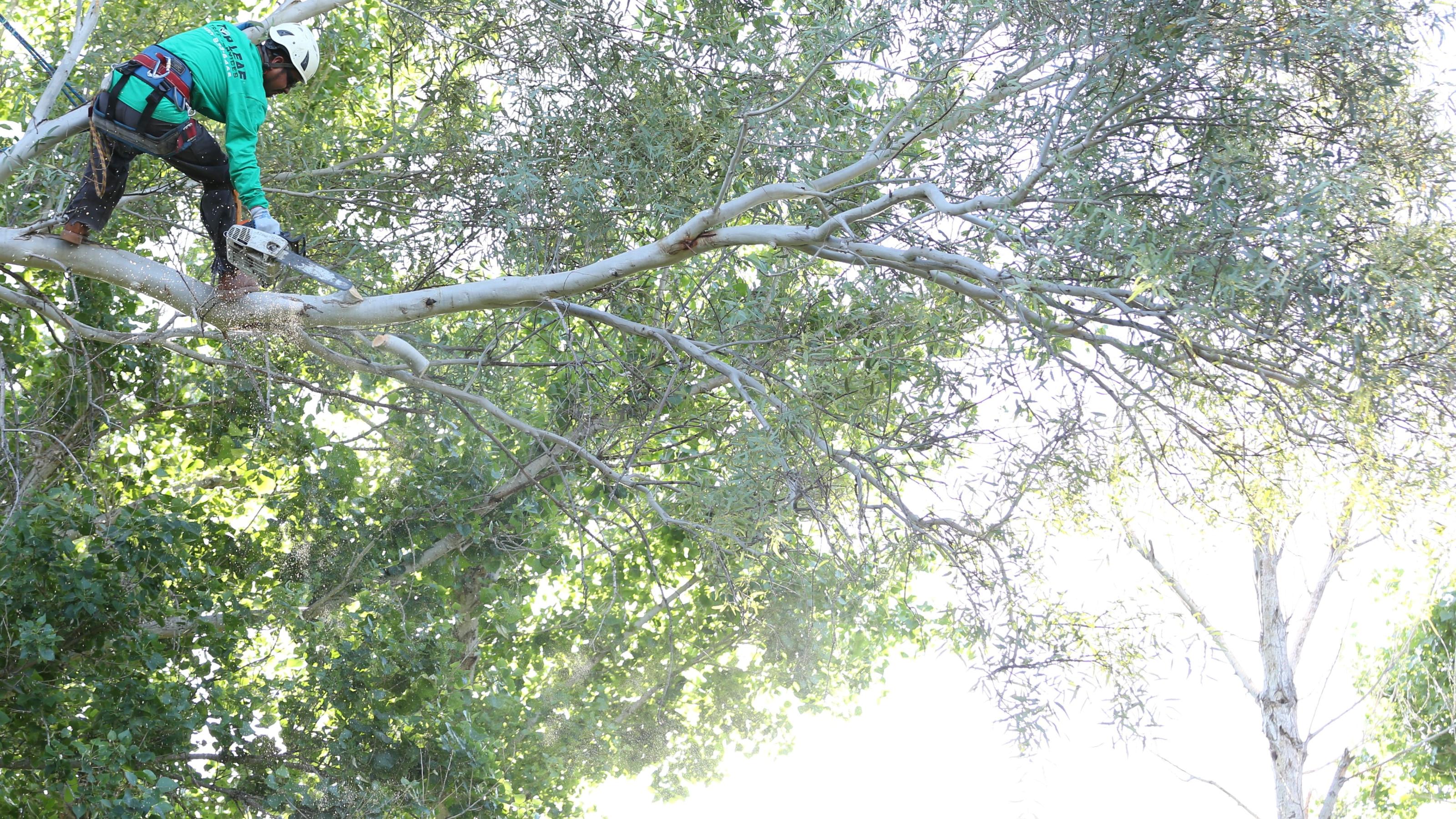
We specialize in strategic fruit tree pruning in Queen Creek, AZ, delivered by ISA-certified arborists focused on disease prevention. Our tree pruning in Queen Creek, AZ employs proven techniques for early leaf spot control and canopy health.
Top Leaf Tree Service offer a full range of services, including tree pruning to enhance air circulation, suppress spore dispersal, and extend tree longevity through targeted branch removal and crown thinning.
Early Leaf Spotting Detected
Early leaf spotting in Arizona's xerophytic species results from pathogenic ingress via stomatal apertures, accelerated by monsoon humidity (60-85% RH) and temperature ranges (75-95°F).
Fungal propagules establish epiphytic colonies, reducing photosynthetic capacity by 15-40% within 2-3 weeks if untreated.
Causal pathway: High moisture + warm temperatures → spore germination → stomatal penetration → chlorotic lesions → canopy decline.
Intervention protocol: Immediate arboricultural assessment determines infection severity.
Strategic pruning removes compromised tissue; dormant oil applications (horticultural mineral oil, 2% concentration) suppress spore dispersal.
Nitrogen-phosphorus-potassium adjustment (10-5-5 ratio) strengthens foliar resistance.
Preventative fungicide rotation during monsoon onset (June-August) reduces infection incidence by 60-75%.
Additionally, expert pruning is essential for maintaining the overall health of fruit trees and preventing the spread of diseases.
Targeted Pruning Reduces Disease Spread
Targeted pruning interrupts pathogen transmission by removing infected tissue before systemic spread occurs. Precise cuts eliminate infection vectors at branch collar junctions, where vascular cambium facilitates pathogen movement. This intervention reduces inoculum load and prevents secondary infection sites.
Mechanism: Removal of diseased branches (>2cm diameter) decreases canopy disease pressure by 60-80% within one growing season. Preserving apical dominance maintains photosynthetic capacity while reducing physiological stress that increases disease susceptibility.
Structural Benefits: Thinning crown density improves air circulation (15-25% increase), reducing relative humidity that favors fungal pathogens. Removing weak branch angles (<45°) eliminates failure points where pathogens exploit wounded tissue.
Outcome: Early intervention extends tree longevity 15-20 years versus untreated trees with progressive decline.
Family-Owned ISA Experts
ISA-certified arborists at Tree Pruning apply evidence-based pruning protocols indexed to species-specific physiology, soil pH ranges (6.0-7.5 optimal), and Queen Creek's USDA hardiness zone 9b climate conditions.
Pruning decisions follow the three-cut method and branch collar preservation standards, reducing disease vectors by 40% versus flush-cuts.
Fertilization employs soil bioassays to determine NPK ratios and mycorrhizal colonization rates.
Emergency response protocols address storm-damage assessment within 24 hours, utilizing risk-based hazard ratings (ANSI A300 standards).
Commercial maintenance cycles operate on 2-4 year intervals based on species growth rates and structural load analysis.
Senior discount programs reduce service costs 15-20% annually.
Arboricultural decisions derive from assessment data, not aesthetic preference.

Get Your Free Tree Pruning Estimate Today!
Top Leaf Tree Service provides ISA-certified arborist services for tree pruning in Queen Creek, AZ.
Operating for 20+ years across Phoenix Valley, the organization specializes in structural pruning, crown thinning, and health maintenance protocols.
Service delivery reduces disease vectors, improves photosynthetic capacity, and extends tree lifespan through evidence-based horticultural practices.
Family-owned operational structure emphasizes safety compliance and quality assurance.
Free estimate requests: 480-933-2909 or office@topleafaz.com.
Client reviews available at SoTellUs.
Contact via our online contact form. .
Queen Creek, AZ Attractions and Landmarks
Queen Creek, AZ attractions integrate desert ecology with sustainable landscape management. The region features parks and botanical preserves demonstrating xeriscaping principles and water-efficient design methodologies.
Educational resources address arboricultural specifications, including crown reduction protocols, soil amendment formulations, and canopy density optimization for residential applications.
Key service attributes: Licensed Arizona arborists maintain ISA certification standards; tree removal operations follow storm-damage protocols; trimming schedules align with growth cycles (dormancy periods optimize recovery rates); fertilization regimens apply NPK ratios calibrated to desert soil pH levels (6.5-7.5 optimal).
Get Started
Fill out form below