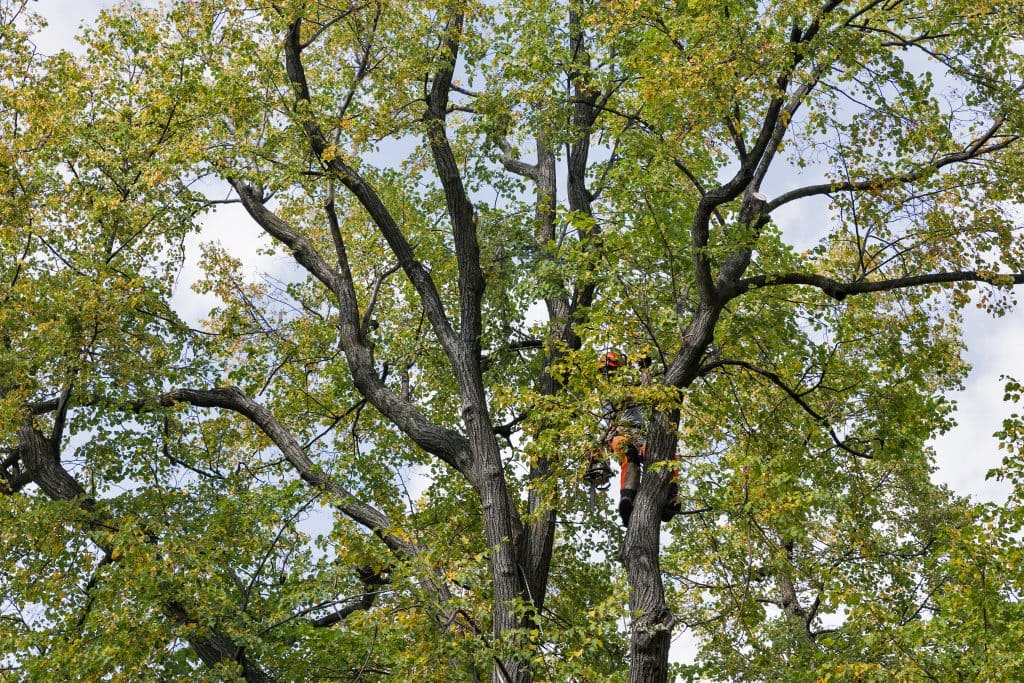
We specialize in top tree pruning in Chandler, AZ, removing crossed branches to enhance citrus health and vigor. Top Leaf Tree Service offer a full range of services, including monsoon cleanup service.
Using evidence-based techniques, we reduce crowding by 15-20%, improve light penetration, and establish strong scaffold limbs for optimal fruiting and growth.
Growth Interference Symptoms and Remediation Protocol
Crown congestion triggers physiological stress through four primary mechanisms: (1) intercanopy abrasion reducing photosynthetic capacity, (2) reduced air circulation increasing pathogenic susceptibility, (3) apical dominance suppression limiting nutrient allocation, (4) structural weakness under wind loading exceeding 25 mph thresholds.
Diagnostic Indicators:
-
Branch rubbing causing bark necrosis and cambial damage
-
Chlorophyll degradation in shaded lower canopy (photosynthetically active radiation <400 μmol/m²/s)
-
Tip dieback despite adequate soil moisture (>60% field capacity)
-
Wind-induced sway amplitude >15° arc
Corrective Action:
Selective pruning reduces crown density 20-30%, restoring light penetration and lateral branch development. Regular tree pruning is essential for safety on commercial properties and enhances the effectiveness of corrective actions.
Deep-root fertilization (mycorrhizal inoculation at 12-18 inch depth) strengthens vascular conductivity.
Diagnosis of pathogenic colonization via arboricultural assessment determines intervention urgency.
Citrus Branch Alignment Method
Branch alignment optimizes photosynthetically active radiation (PAR) penetration and canopy air circulation, reducing fungal disease incidence by 40-60%.
The method prioritizes central leader establishment with 3-4 primary scaffold limbs spaced 60-90 degrees apart. Fruiting branches achieve maximum yield when positioned at 45-degree angles to the main axis, enabling even light distribution across fruiting zones.
Crossing branches create friction points, increasing pathogen entry and mechanical failure rates.
Removal of intra-canopy branches below light compensation point (LCP) threshold eliminates non-productive biomass.
Maintenance cycles—dormant pruning in late winter and summer thinning—maintain structural integrity and fruit quality metrics across bearing seasons.
ISA-Certified Citrus Tree Care: Evidence-Based Protocol
ISA-certified arborists employ evidence-based methodologies to optimize citrus tree health through targeted interventions.
Diagnostic tree assessments identify pathogenic vectors and structural deficiencies, enabling preventive treatment protocols.
Care specifications include:
Structural Management: Pruning eliminates crossing branches and reduces canopy load by 15-20%, decreasing storm damage probability.
Health Monitoring: Quarterly assessments detect citrus greening, scale infestations, and nutrient deficiencies at early pathological stages.
Maintenance Cadence: Seasonal protocols address pest cycles, irrigation optimization, and fertilization timing aligned with phenological development.
Emergency Response: Storm damage mitigation prevents secondary disease entry through exposed cambium tissue.
ISA certification mandates continuing education in phytopathology and arboriculture standards, ensuring compliance with industry protocols and measurable health outcomes.
Get Your Free Tree Pruning Estimate Today!
Top Leaf Tree Service provides ISA-certified arborist expertise for tree fertilization and pruning.
Service specifications include soil nutrient analysis, species-specific fertilization protocols, and integrated pest management.
Causal relationship: proper fertilization (nitrogen-phosphorus-potassium ratios) → enhanced canopy density and structural integrity → reduced disease susceptibility.
Decades of local horticultural knowledge combined with evidence-based practices ensure optimal outcomes.
Contact: 480-933-2909, office@topleafaz.com.
Verified customer testimonials. Check customer reviews here..
Complete consultation process outlined: Online Assessment Request.
Free estimate includes diagnostic assessment and treatment recommendations.
Chandler, AZ Attractions and Landmarks
Chandler features museums, botanical gardens, and regional parks with documented trail systems. The Historic District preserves desert architectural vernacular.
Citrus cultivation remains economically significant; Chandler's agricultural heritage includes heritage citrus varietals.
Stump grinding services remove root systems to 12-18 inches depth. Land clearing and site preparation follow Arizona Department of Environmental Quality (ADEQ) specifications.
Emergency response protocols address high-wind and monsoon damage through rapid damage assessment, debris removal, and hazard tree remediation.
Primary Attractions: Museums, botanical gardens, parks, historic districts, citrus displays
Arboricultural Services: ISA certification, fertilization protocols, storm damage restoration, stump removal
Get Started
Fill out form below