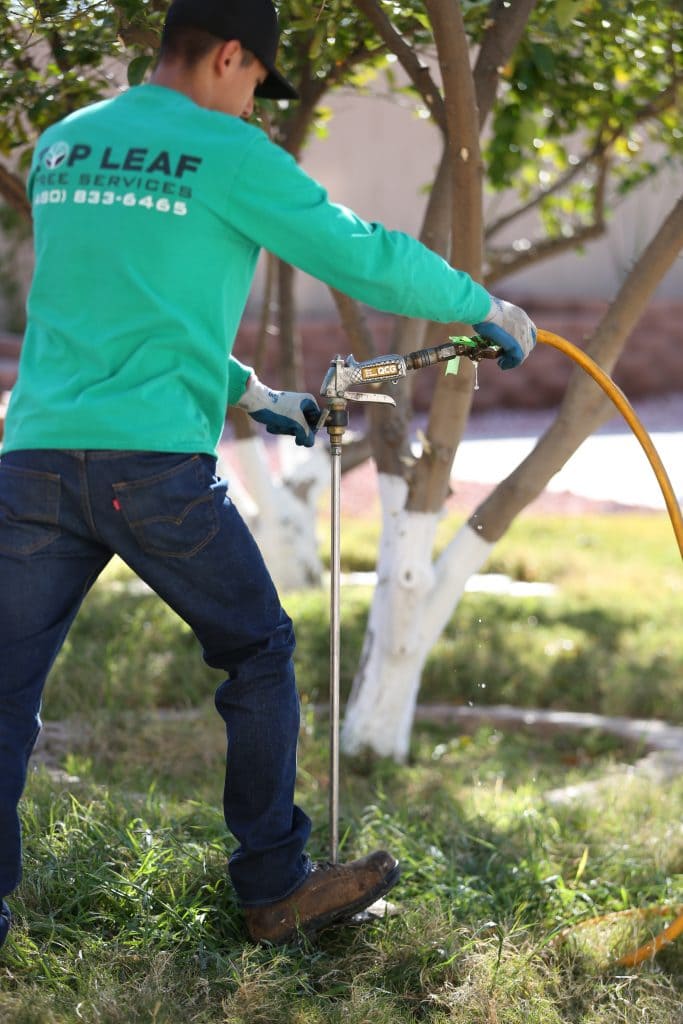
We specialize in comprehensive palm care for Mesa's challenging soil conditions. Our tree fertilization in Mesa, AZ addresses poor drainage and anaerobic stress through engineered solutions.
Top Leaf Tree Service offer a full range of services including tree removal. We combine strategic drainage, soil amendments, and species-appropriate nutrition to enhance root function and vascular health in desert environments.
Overwatering Risks Palm Root Rot
Excessive irrigation creates anaerobic soil conditions that inhibit oxygen diffusion to root tissues. This environment accelerates fungal colonization—particularly Phytophthora and Fusarium species—triggering root decay and vascular dysfunction.
Mesa's desert soil composition intensifies moisture retention risks, establishing pathogenic conditions within 48–72 hours of waterlogging.
Diagnostic and Preventive Protocols
Soil Moisture Assessment: Tensiometer readings between 10–20 centibars indicate optimal moisture thresholds for palm species. Readings below 5 centibars signal anaerobic stress.
Root System Evaluation: A certified arborist assessment identifies pathogenic colonization and determines intervention viability. Deep root fertilization application supports nutrient translocation in compromised systems.
Intervention Timing: Early-stage root dysfunction responds to irrigation adjustment and targeted fungicide application. Advanced necrosis necessitates specialized tree services for damage containment. Natural fertilizers enhance tree health.
Palm Root Zone Drainage Management
Desert palms require engineered drainage systems to prevent rhizosphere saturation and anaerobic degradation. Subsurface grading with soil amendments increases percolation rates in Mesa's clay-dominant profiles.
Perforated drain lines positioned 18-24 inches below grade channel gravitational water movement, while gravel collars maintain radial drainage geometry around root collar zones.
Aeration through shallow trenching disrupts compaction layers that impede oxygen diffusion. Periodic soil flushing reduces salt accumulation and redistributes moisture tension gradients.
Volumetric soil moisture monitoring via tensiometers or capacitive sensors informs irrigation calibration, preventing both deficit stress and hyperhydration that triggers phytophthora susceptibility in established specimens.
ISA-Certified Arborist Services: Arid Climate Specialization
Our ISA-certified arborists conduct site-specific evaluations of soil composition, drainage capacity, and microclimatic conditions.
Native desert species selection—including palo verde, mesquite, and acacia varieties—aligns with Mesa's precipitation patterns and evapotranspiration rates, reducing irrigation demand by 40-60% compared to non-adapted taxa.
Root Development & Soil Structure
Strategic planting protocols optimize lateral root expansion within compacted urban soils.
Amendment strategies address caliche layers and alkaline pH conditions endemic to the region, preventing waterlogging and pathogenic fungal colonization.
Nutrient Management
Formulations balance nitrogen-phosphorus-potassium ratios with micronutrient bioavailability in calcareous substrates, supporting long-term vigor without excessive mineralization that degrades soil structure.
Get Your Free Tree Fertilization Assessment Today!
Top Leaf Tree Service provides ISA-certified arborist evaluations addressing nutritional deficiencies, soil composition analysis, and species-specific amendment protocols.
Our diagnostic methodology identifies micronutrient imbalances, pH levels, and root zone compaction—critical variables affecting long-term crown development and structural integrity.
Customized fertilization plans account for desert soil conditions, Arizona native species requirements, and post-storm recovery protocols.
Service Coverage: Mesa, Gilbert, AZ and surrounding regions
Technical Consultation:
-
Phone: 480-933-2909
-
Email: office@topleafaz.com
Complimentary diagnostic assessments establish baseline plant health and prevent secondary pathogenic complications.
Mesa, AZ Landmarks: Cultural and Ecological Integration
Mesa's attractions balance suburban development with historical preservation through systematic arboriculture. Cultural sites incorporate canopy management protocols, with queen palm (Syagrus romanzoffiana) maintenance along pedestrian corridors managed by ISA-certified arborists.
Arboricultural Infrastructure
Licensed practitioners implement storm damage mitigation through preventive pruning and structural assessment.
Stump removal operations support soil remediation and replanting initiatives, expanding native canopy coverage. Emergency response protocols address weather-related tree failure, utilizing equipment specifications for safe debris management.
Horticultural Asset Management
Professional fertilization programs optimize tree vigor while reducing pathogen susceptibility.
Integrated pest management practices protect specimen palms and established shade trees, extending landscape functionality and visitor experience quality.
Get Started
Fill out form below